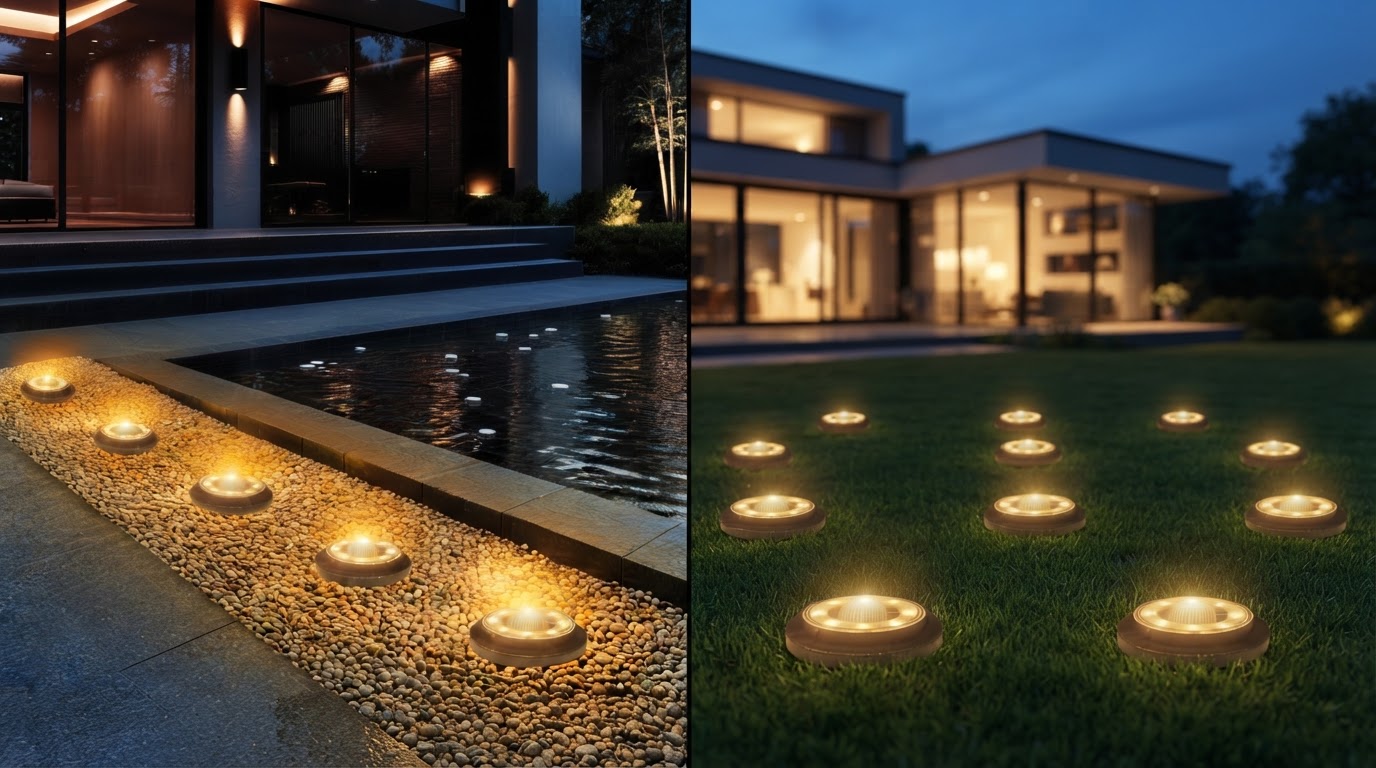
How do Solar Ground Lights compare to puck lights?
 Priya RamanSenior Analyst
September 4, 2026 — Solar ground lights provide a flush-mounted illumination solution that balances aesthetic integration with long-term weather resistance, provided they utilize monocrystalline panels and IP68-rated housings.
Homeowners and landscape architects often evaluate these fixtures for high-traffic areas like driveways and garden paths where traditional staked lighting is impractical. Selecting the right hardware requires a framework based on structural integrity and light distribution patterns. Think of it as a matrix of durability versus installation depth; the choice determines whether a fixture survives regular foot traffic or seasonal maintenance equipment.
Are solar ground lights more durable than solar puck lights?
Solar ground lights engineered for driveways typically offer superior weight-bearing capacity and water ingress protection compared to standard decorative puck lights. The decision rule: if the installation area involves vehicle weight or heavy irrigation, a ground light with a stainless steel bezel is mandatory. Standard LED solar puck lights for the yard often rely on plastic housings that may crack under the pressure of a vehicle or a lawnmower. Research indicates that high-quality solar ground lights are designed to withstand up to several tons of pressure, making them suitable for residential driveways. This durability is a critical factor for those seeking [mower-safe solar ground lights](/blog/mower-safe-solar-ground-lights) to ensure the longevity of their landscape investment without requiring removal during lawn care. Furthermore, the internal components of dedicated ground units are frequently potted in resin to prevent internal condensation, a common failure point in cheaper puck alternatives.
Which light distribution is better for driveways and paths?
Photo by ClickerHappy on Pexels
Solar ground lights generally offer a wider 360-degree lateral throw, whereas puck lights often focus on a more concentrated vertical glow. Two axes matter here: the angle of the LED and the transparency of the lens material. For driveway safety, a wide-angle beam is necessary to define the perimeter without creating glare that obscures the driver's vision. Because these units sit flush with the surface, they avoid the tripping hazards associated with raised path lights. This flush profile is particularly beneficial in households with pets, aligning with the requirements for dog friendly solar lawn lights where protruding hardware could cause injury. Once you see it this way, the preference for ground-integrated units over surface-mounted pucks becomes clear for high-traffic zones. Proper placement involves a specific [outdoor solar disk lights setup](/blog/outdoor-solar-disk-lights-setup) to ensure the internal batteries receive at least six hours of direct sunlight to maintain consistent brightness through the night.
Quick answers
Photo by Angelo Capitanio on Pexels
Q: Can solar ground lights be installed in concrete driveways? A: Yes, provided a core drill is used to create a recessed cavity that matches the specific diameter of the Solar Ground Lights unit. Most professional-grade units require a depth of approximately 50mm to 100mm for a true flush finish.
Q: How long do the batteries in these units typically last? A: The internal 600mAh to 1200mAh Ni-MH or Li-ion batteries generally require replacement every 18 to 24 months depending on local temperature fluctuations. Cold climates may see a reduction in total discharge cycles compared to temperate regions.
Q: Are these lights safe for commercial mower use? A: Only units specifically rated as "driveover" or "mower-safe" with a low-profile stainless steel or reinforced polycarbonate rim should be used in areas maintained by commercial riding mowers. Standard decorative puck lights will likely be destroyed by mower blades if they sit even 10mm above the soil line.
Learn more about Solar Ground Lights at https://solargroundlights.com.